
Thoughts While Harvesting Clay
There’s a collective need for the human right now: the dirt, the flesh, the tangible, the mess. I want to read words that a human wrote; alive and imperfect. It hits differently than words synthesized and churned out by a machine. I want to hear the cadence of a human voice, the imperfections of human grammar, feel emotion that moved up and through a feeling human body. I want to interact with art that holds fingerprints and eat food farmed by suntanned hands. I’m craving the depth of human soulfulness that only humans can embody.
-
Quantum physicist and environmental activist Dr. Vandana Shiva shared, in an interview I recently came across, that the Latin word for living soil is humus— and that human, and humility, are both derived from it. To be truly human then, is to be of the soil. To be truly human is to be humble.
And I think, too, to be truly human is to know, deep in our bones, that we are derived from living earth.
I often find myself acutely aware of my own craving for nature immersion— often a primal type of immersive experience; digging, clawing, low to the ground and barefoot with the childlike wonder of it all. Maybe in part, I lean into this to boldly resist the false narrative that we are separate from nature, separate from one another.
As I dig for clay, I interact with root systems and mycelial networks and am reminded how trees tap into the deep underground for connection and communication. I wonder if, on some conscious or subconscious level, we’re all craving the safety to experience that depth with other people- to be vulnerable, to expose our mess and imperfections, our rough edges and tender spaces- because when that’s met with love and acceptance, we access deeper connection, and might know ourselves as part of a greater whole.
Might we, as a species, be craving the human and craving the humus? Because deep in our bones, we know that there’s a specific kind of aliveness only accessed when immersed in either? And isn’t the human experience just that, anyway? To seek out experiences that remind us that we were never actually separate to begin with?
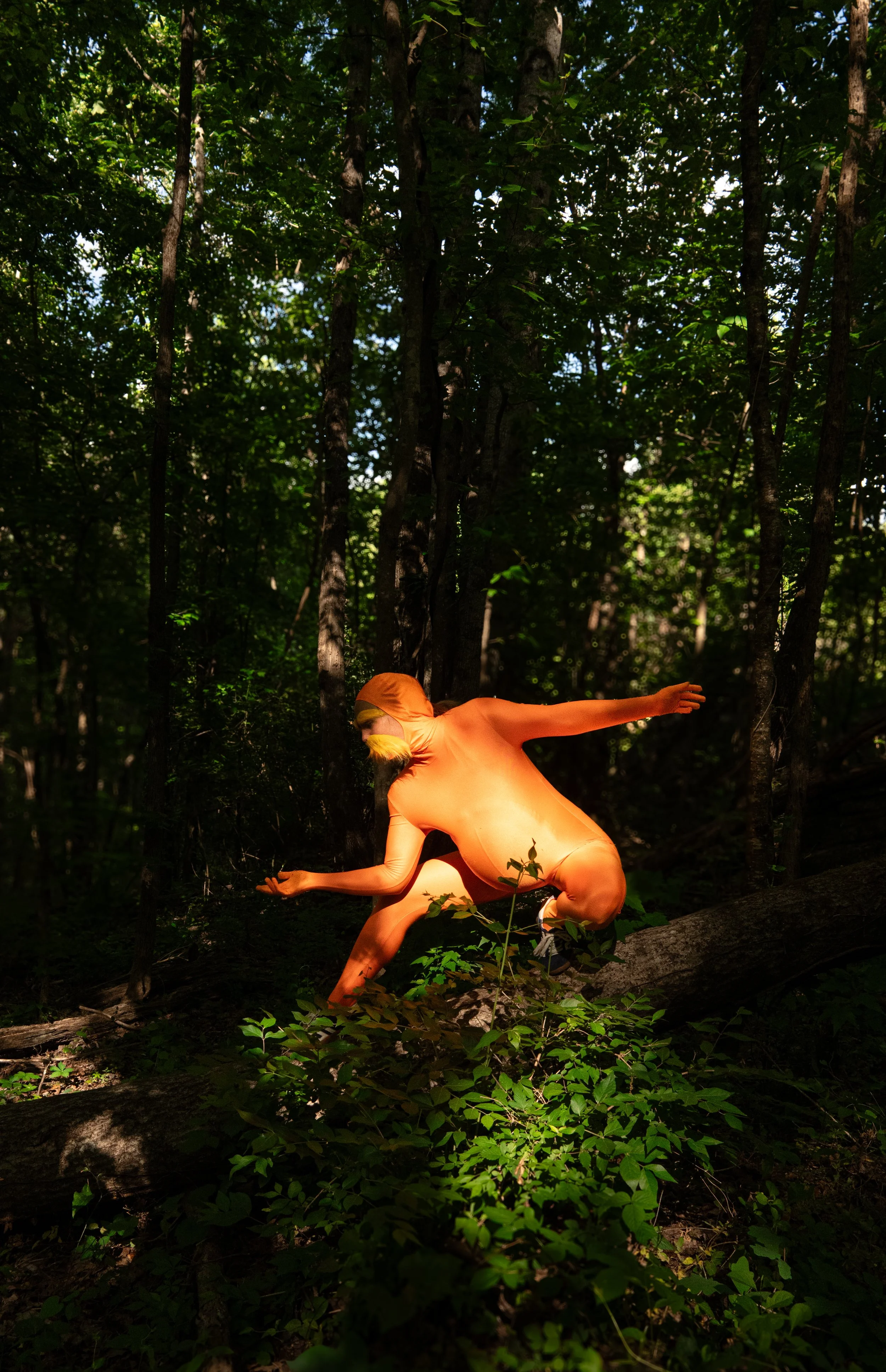
Reflections on Earth Day and The Lorax
Reflections on Earth Day, The Lorax, and our Responsibility to our Home.
I read The Lorax for the first time as an adult. And I cried, y’all. Real, full tears.
My art often explores the intersection of humans and nature. Simply put, we are nature, not separate from it. I often reflect on how so much of the world’s suffering stems from the fact that, as a collective, we’ve forgotten this simple yet profound truth.
We cycle through the 24 hour circadian rhythm, matching the cycle of the sun. Menstruating people have a 28 day infradian rhythm; and whether by design or beautiful coincidence, it mirrors the moon’s cycle. We experience seasons within our own bodies that echo the earth’s seasons. Like the trees, we communicate through subtle energies that move beyond language; our bodies themselves a complex network with their own innate wisdom. Our bodies and nervous systems crave to climb and dig and roar because we are animals and our bodies have never forgotten this.
This is an exquisite existence. To be human. To be nature. To be humans in nature.
The Lorax is not a children’s story but a warning against environmental destruction, corporate greed, and the failure to speak up for nature. Once-ler doesn’t destroy the forest out of malice. He destroys it out of momentum: the insidious violence of not stopping. The Lorax bears witness, names what is being lost and is not heeded.
Sound at all familiar?
I am living in a moment of profound grief and profound beauty simultaneously. I am watching my children hop rocks through a creek while the wolves go quiet. I am smelling rich soil while the bees (oh, the bees!) disappear. I am climbing trees with my kids while young trees are dying of disease because their mother trees and grandmother trees were taken for lumber. And I am raising humans who will inherit whatever we choose- or fail to choose- right now.
Here’s a wild and astonishing truth: placing bare skin to soil releases serotonin, the same neurotransmitter targeted by antidepressants. The earth is, biochemically, literally, medicinally, doing something to us when we touch her. Dear God. It’s poetry.
The question The Lorax leaves us with is not really about trees. It’s about whether we are capable of caring about something beyond our immediate momentum. Whether we can pause and witness and choose with intention. Only by sensing our deep collective connection to nature, and tuning into a heart of reciprocity, will we acknowledge our immense responsibility to our home.
“I am the Lorax. I speak for the trees… Unless someone like you cares an awful lot, it’s not going to get better. It’s not.” (From Dr. Seuss’ The Lorax). Join me today. Plant some native wildflowers. Do it barefoot. I’m always, always amazed by how I learn to love better by witnessing the natural world.